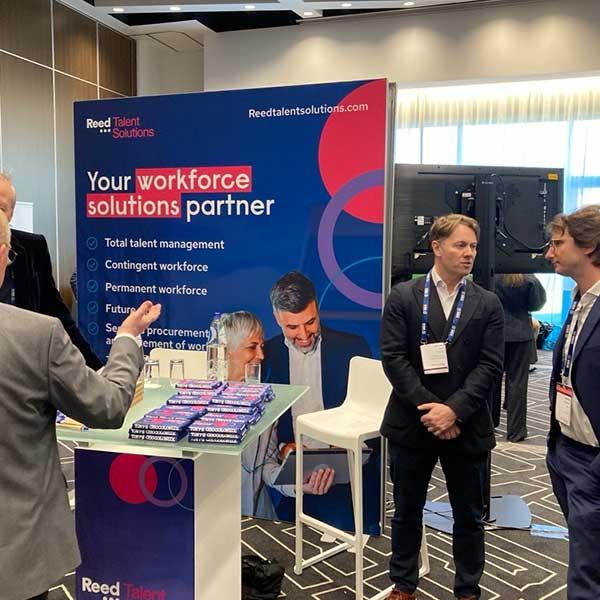

The talent acquisition landscape is evolving faster than ever. As organisations grapple with the complexities of an increasingly competitive and unpredictable market, the traditional ways of sourcing and managing contingent labour are no longer enough. Recent discussions at both ProcureCon Total Talent, in Amsterdam, which took place in March, and our exclusive Reed Talent Solutions roundtable in London, ‘Unlocking value in services procurement’, at the beginning of February, highlighted a shift in how enterprise leaders approach their workforce.
Different industries are facing similar challenges. Misclassification, IR35 compliance, poorly defined scopes of work, stakeholder engagement, and programme ownership consistently raised on boardroom agendas. Procurement is no longer simply about driving down costs. It is about building strategic, high-performing solutions with clear ownership, alignment with HR and talent teams, and measurable outcomes extending beyond cost savings.
Continuous improvement is the key to staying competitive, and understanding these trends will help you position your organisation for long-term success.
The hidden risks of misclassified spend
One of the most pressing challenges raised by procurement professionals is the classification of spend. Many large organisations experience a high volume of misclassification between services spend and contingent labour. This obscures total spend visibility, hampers accurate reporting, and introduces significant regulatory risk.
Why does this happen? Hidden services spend is often not accidental. It is frequently a direct response to internal processes or controls that stakeholders avoid keeping a project on track.
Bringing visibility to services procurement
When stakeholders actively engage resources outside of established managed service programme guidelines, you face a critical decision. Do you enforce stricter mandates, or do you deploy a specialist services procurement solution with a different user journey and tailored business rules?
To regain control and ensure cost-efficient project delivery, you must first establish visibility. Services spend is commonly recorded against a variety of general ledger codes, making it incredibly difficult to run a simple report and start negotiating with suppliers. Interrogating this data requires substantial time and effort to identify suppliers by business purpose and isolate those in scope.
Organisations that successfully tackle this challenge are moving away from manual audits. Instead, they are looking toward advanced technological solutions to create baselines for future savings and build robust internal business cases for better governance.
Artificial intelligence as a strategic enabler
Artificial intelligence is reshaping the procurement function, establishing itself as a practical tool that drives efficiency and compliance. Our roundtable discussions revealed a strong appetite for using AI to tackle the heavy lifting associated with spend analytics and scope definition, ensuring that tasks are actually converted to outcomes bringing rigour to the SoW.
Automating triage and spend analytics
Triage via AI presents an attractive proposition to address the issue of determining the correct route to market. Specialist spend analytics technology can now use AI to scrape and classify supplier data, interrogating master service agreements, and SoWs, to identify hidden opportunities.
This level of deep analysis highlights solutions to existing pain points such as invoice discrepancies, variable pricing structures, and IR35 risks. By leveraging data-driven insights, you can prove the extent of maverick spend quickly, build a compelling internal business case, and move rapidly from mere visibility to strategic action.
Transforming scope definition
Poorly defined scopes of work make it incredibly difficult to realise value, often leading to project overruns, budget overspend, and compliance failures. Writing a robust statement of work (SoW) does not often form part of a stakeholder’s natural skill set. Users often list several tasks that require completion. Consequently, they frequently rely on their suppliers to create the initial scope. This practice typically results in documents with high-level deliverables and vague milestones, creating significant delivery and legislative risk.
How safe is AI for this business purpose? While concerns around data sensitivity exist when using open-source AI models, purpose-built procurement technology offers a secure alternative. Advanced tools can now convert a simple sentence explaining a project goal into a fully structured, milestone-driven scope. Furthermore, AI analysers can review existing SoWs, rate their effectiveness, and offer targeted suggestions for improvement, ensuring your contracts are tight, compliant, and outcome focused.
Driving stakeholder engagement and governance
Successful procurement is only part of the journey. True value is realised through the effective delivery and governance of contracts. Top-down mandates to drive user compliance are often viewed as the ideal solution to address contract leakage. However, building the internal business case to secure that mandate remains a significant hurdle.
Moving beyond top-down mandates
There is very little training available for stakeholders buying at a decentralised level. When stakeholders choose to work outside of organisational rules - gaming spend thresholds or using unvetted suppliers - they create additional administrative burdens and risk.
Is education the key to successful governance and cultural change? Engaging with stakeholders early and ensuring they understand the commercial and regulatory risks of poor SoW management is vital. Stakeholders must understand the tangible benefits of effective governance, such as milestone management and guaranteed deliverables. Changing the culture of an organisation requires a collaborative approach rather than purely punitive measures.
Giving human resources a seat at the table
By giving human resources a seat and voice in the boardroom during procurement discussions, companies can ensure decisions are more aligned with people, strategy, and long‑term growth.
HR teams cannot be expected to build effective, future-resistant organisational designs and skills profiles if large proportions of their future capability needs are hidden within fragmented SoWs. Statements of work often arise due to capacity or capability deficiencies within a department and frequently feature a repeater element. Recognising this spend as a core component of your current and future people strategy is the first step toward true workforce optimisation.
Embracing total talent management
The boundaries between contingent labour, permanent hiring, and services procurement are blurring. The insights gathered from ProcureCon Total Talent underline the necessity of a unified approach. Total talent management is no longer an aspirational concept; it is a practical necessity for large enterprises operating in complex regulatory environments.
Fluid organisational design
Widespread AI adoption and shifting economic pressures are making organisational design more fluid than ever. Organisations require scalable talent solutions that provide unmatched industry insight and compliance guaranteed at every stage of the worker lifecycle.
To build a tailored workforce strategy, you must break down the silos between procurement, HR and Talent. A holistic view allows you to leverage diverse talent pools, understand skills that may be hidden under SoW’s, foster an inclusive hiring environment, and ensure that every pound spent on talent directly aligns with overarching business objectives. Rather than reacting to capability gaps as they arise, proactive organisations refine their supply chains to ensure access to niche skills exactly when they are needed.
Join the conversation at CWS Summit 2026
Gaining control of services spend and navigating the total talent landscape is a complex, multifaceted challenge. It requires cohesive strategies that align the organisation, stakeholders, suppliers, procurement, finance, and HR. As is often the case, one size does not fit all. Adaptability, expert guidance, and continuous learning are essential to drive meaningful change.
Reed Talent Solutions is delighted to attend this year’s CWS Summit, taking place at the Royal Lancaster Hotel in London, on 19 and 20 May 2026. As platinum sponsors, we are eager to continue these vital conversations with industry leaders and procurement professionals.
Join us at the summit to explore the latest innovations in workforce management, dive deeper into AI-driven procurement technologies, and discover how to unlock maximum value from your talent supply chain. We look forward to seeing you there and helping you build a smarter, more resilient workforce strategy.